By Doug Parker
November 9, 2026
An outdoor deck serves as a natural extension of the home, offering an inviting space for summer barbecues, quiet morning coffees, and gatherings with family and friends. Because decks endure year-round exposure to sun, rain, snow, and fluctuating temperatures, wear and tear are inevitable. Over time, every homeowner faces a critical maintenance decision: can existing boards and railings be salvaged, or is the entire structure nearing the end of its useful lifespan? Catching minor issues early often makes the difference between an affordable weekend project and an unplanned structural reconstruction.
Determining whether to choose targeted maintenance or complete reconstruction requires understanding how deck components function together. Many homeowners actively plan ahead for structural upkeep. According to This Old House, nearly half of surveyed homeowners intended to tackle home repair projects in 2025. Evaluating load-bearing posts, evaluating surface wear, and checking connection hardware will help you make an informed, cost-effective decision that keeps your outdoor space safe and structurally sound.
Assessing the Substructure for Timber Decay
The most reliable indicator of whether a deck requires a simple fix or a full replacement lies beneath the surface boards. The substructure—composed of concrete footings, support posts, beams, and joists—carries the entire structural load. If the framework remains solid, true, and free of decay, surface-level issues can usually be resolved with isolated deck repair rather than starting over from scratch.
Inspect the points where wooden posts meet the concrete footings or the soil. Any softness, crumbling, or spongy texture in the wood indicates rot. Probing these areas with a flathead screwdriver is a practical diagnostic method; if the tool sinks easily into the timber without resistance, the core fibers have degraded. Subterranean moisture and poor soil drainage around the footings can quietly accelerate this decomposition. When structural decay is confined to a single joist or an isolated cantilever, an experienced carpenter can often sister a new timber alongside the damaged piece. If rot has compromised multiple foundational posts or the primary ledger board, rebuilding the frame is the only safe path forward.
Examining the Ledger Board for Secure Anchoring
The ledger board attaches the deck directly to the home's band joist, providing critical lateral stability and support. A failing ledger connection represents one of the leading causes of catastrophic deck collapse. Proper flashing must sit above the ledger board to shed water away from the house envelope. If water has penetrated behind this connection, both the ledger and the rim joist of the residence may suffer hidden dry rot.
Examine the hardware securing the ledger to the foundation or framing. Modern building codes require heavy-duty lag screws or through-bolts rather than simple nails. If nails were used during initial construction, or if existing bolts are heavily corroded, immediate intervention is necessary. Reinforcing or replacing connection hardware often qualifies as straightforward deck repair, provided the surrounding timber remains completely sound. Adding modern tension-tie brackets can dramatically reinforce older framing against sudden pull-away forces. If the structural wood behind the bolts has rotted, the ledger can no longer safely anchor the platform, signaling the need for extensive structural rebuilding.
Inspecting the Surface Planks for Material Degradation
Deck boards endure the brunt of foot traffic and ultraviolet radiation, meaning they often show age long before the underlying frame fails. Cupping, minor splintering, fading stain, and surface hairline cracks are natural occurrences on natural wood decking. In most circumstances, surface degradation alone does not justify tearing down an otherwise sturdy structure.
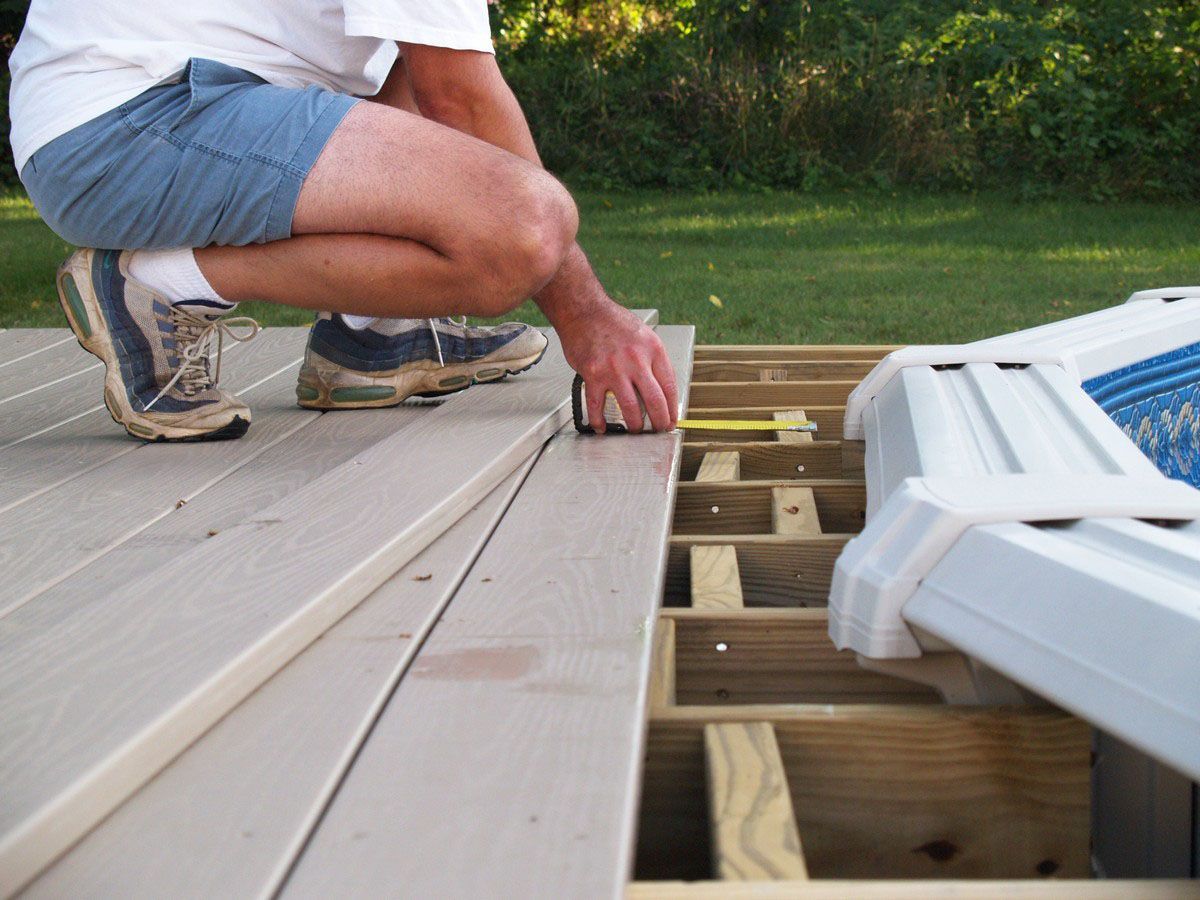
Routine maintenance can reverse many common cosmetic issues. Pressure washing, thorough sanding, and applying an oil-based penetrating sealer or solid stain can restore the appearance of aged timber. When individual boards split completely, cup severely, or exhibit localized rot around screw holes, selectively removing and replacing those specific planks is an economical deck repair strategy. Fasteners that continuously back out of the surface often signal that the underlying joist has softened around the screw threads. If a substantial portion of the surface boards are decaying, or if you wish to transition from traditional timber to low-maintenance composite materials, resurfacing the entire top layer while preserving a healthy frame offers an efficient middle ground.
Checking the Railings and Stairs for Physical Stability
Stairs and railings represent high-liability zones where safety is non-negotiable. Building codes require deck railings to withstand substantial horizontal force without shifting or bowing. Over years of seasonal expansion and contraction, mechanical fasteners can work loose, causing balusters to wiggle and top rails to feel unstable.
Check for movement by firmly gripping the rail posts at various points along the perimeter. A loose railing post anchored to an intact rim joist can typically be tightened using through-bolts and structural framing brackets. Replacing damaged balusters, loose stair treads, or worn handrails is standard deck repair work that protects occupants without requiring an overhaul of the platform. However, if the framing supporting the stairs has pulled away from the deck, or if stair stringers have rotted where they contact the ground, replacing the stair assembly entirely is essential to prevent falls.
Reviewing the Structural Age for Building Code Compliance
The age of the deck plays a decisive role in evaluating repair viability. While well-maintained timber structures can provide decades of reliable service, composite and hardwood materials often endure significantly longer. If an older deck is showing widespread signs of structural fatigue across multiple primary components, investing in recurring deck repair projects often becomes more expensive over time than funding a complete rebuild.
Building safety codes have also advanced considerably over the years. Older decks frequently lack continuous handrails, proper joist hangers, post-to-beam connectors, and modern hurricane ties. Modern attachment requirements are specifically engineered to resist seismic shifts and heavy snow loads that older construction methods never anticipated. Retrofitting an aging platform to meet contemporary safety codes can prove labor-intensive and costly. When an older deck demonstrates systemic structural movement, noticeable bounce, or continuous sagging, replacing the installation ensures that every element adheres to current engineering guidelines.
Calculating the Long-Term Costs for Financial Efficiency
Financial considerations invariably factor into the decision-making process. As a general guideline, when the cumulative cost of ongoing repairs approaches a major fraction of a brand-new installation, total replacement often yields better long-term financial value. Continuously patching isolated sections of an aging frame can leave homeowners caught in an endless cycle of maintenance calls.
On the other hand, addressing minor issues early through timely deck repair prevents minor water intrusion from turning into full-scale structural failure. Resealing boards on a regular maintenance schedule, replacing rusted screws with galvanized or stainless steel alternatives, and clearing wet leaves from between board gaps all extend the usable life of the original installation. Performing an annual visual audit in the spring lets you tackle small framing or surface defects before they snowball into costly hazards. A professional assessment can determine whether your structure still possesses years of reliable service or represents an impending safety hazard.
Deciding between targeted restoration and an entirely new build comes down to structural integrity, safety, and long-term value. When footings, posts, and main support beams remain solid, addressing damaged boards, loose railings, or localized rot allows you to enjoy your outdoor living area without unnecessary expenditure. When decay penetrates the foundation, or when widespread rot compromises structural connections, investing in a full replacement provides lasting peace of mind and increases your property value. Contact House Doctors Handyman Service Co to evaluate your outdoor structure and determine whether an efficient restoration or a modern replacement is the safest, most cost-effective path forward for your home.